Green/Gray Tree Frogs in Indiana

Hidden Garden Singers of the Night
Indiana is home to many fascinating animals, but few are as easy to hear and as difficult to spot as the green/gray tree frog. These small amphibians are masters of camouflage, blending into bark, leaves, and branches so well that many people never notice them even when they are nearby. Their loud, musical calls often reveal their presence long before their bodies do. For anyone new to Indiana wildlife, the green/gray tree frog is a perfect example of a species that are common, useful, and surprisingly remarkable.
Green/Gray tree frogs are native to Indiana and are found across much of the state, especially in wooded areas, neighborhoods with trees, and places near ponds, wetlands, and streams. They are most active during warm months and are best heard on humid evenings and summer nights. Even though they are small, they play an important role in the ecosystem by eating insects and serving as prey for larger animals. Their unusual appearance, climbing ability, and seasonal habits make them one of the most interesting frogs in the Midwest.
Tree frogs hide during the day
Green/Gray tree frogs spend most of the daytime hidden away in cool, damp places where they are protected from heat and drying out. Since their skin must stay moist to function properly, they avoid direct sunlight and dry open areas. During the day, they often rest on tree trunks, beneath loose bark, among leaves, in shrubs, or tucked into vegetation near water. Their coloring helps them disappear into these surfaces, which makes them hard to find unless they move or call. When they are not in hiding, we notice several them on our walls and porch areas just before sundown.
They are called tree frogs because they are excellent climbers. Their sticky toe pads help them cling to vertical surfaces such as bark, branches, window screens, and even siding. In many yards, they may hide in ivy, ornamental plants, flowerbeds, or shaded garden areas. If the weather becomes especially hot and dry, they may retreat deeper into protected crevices where moisture is higher. These hiding habits help them avoid predators and conserve water throughout the day.
We notice that on our property there are small little holes in the stones around steps by our porch is one area where we often find these frogs hiding, as well as near our patio under the leaves we leave put for the many insects that rely on coverage year round. Even though we do have a creek along the property, it seems we are able to hear or find some of the frogs located closer to the house and barn rather than along the creek side throughout the day.
Predators and "Flash Pattern"
Green/Gray tree frogs must stay alert to a variety of predators. Birds, snakes, larger frogs, toads, raccoons, opossums, and small mammals may all eat them if given the chance. Their main defense is not poison or speed, but camouflage and hiding. Because their gray or green skin can match the bark and foliage around them, predators often overlook them entirely. Some of these frogs have a bright yellow or orange patch on the inner thigh which is known as a "Flash Pattern" that is used to startle predators when the frog jumps.
When threatened, they may stay perfectly still, relying on their ability to blend in. This stillness is an important survival strategy. Their small size also helps them vanish into cracks, branches, and leaves where larger animals cannot easily reach them. In this way, the gray tree frog survives by being quiet, cautious, and difficult to notice.

Food for Tree frogs become a landowners benefit for insect control
Gray tree frogs are insect eaters. They feed on a wide range of small prey, including mosquitos, flies, beetles, ants, moths, crickets, and other tiny insects. Because they are nocturnal hunters, they usually feed at night when insects are active. Their sticky tongues allow them to catch prey very quickly.
This insect diet helps gardeners and homeowners because gray tree frogs naturally reduce insect populations. They are especially useful in areas where mosquitoes and other small flying insects are common. A healthy frog depends on a steady supply of appropriately sized insects, and in the wild it gets this by hunting in its natural habitat. Their feeding habits make them an important part of the food web and a helpful species to have around.
It depends on your contribution to Nature.
By mindfulness living these frogs to live longer
In the wild, green/gray tree frogs can live for several years if they avoid predators, disease, and habitat loss. Many factors affect their lifespan, including weather, food supply, and the safety of their surroundings. In good conditions, they may survive long enough to breed in multiple seasons.
Like most amphibians, gray tree frogs are vulnerable to environmental changes. Pollution, pesticide use, habitat destruction, and drought can shorten their lives. In protected environments, they may live longer than wild individuals, but exact lifespan depends on the species, care, and conditions. Their life expectancy is often longer than people expect for such a small animal.
How to protect them is a good valid question:
Would you rather get bit by mosquitos or hear a frogs ribbit?
The best way to protect green/gray tree frogs is to protect their habitat. Wetlands, wooded areas, native plants, and clean water sources are all important to their survival. Reducing pesticide use also helps, because frogs can absorb chemicals through their skin. Leaving leaf litter, logs, and native vegetation in place provides shelter and hunting areas.
Homeowners can also help by keeping outdoor lighting limited at night, since excessive light can disturb insects and frogs. Ponds and garden areas should be safe from pollution and unnecessary disturbance. If people respect these small animals and their habitat, gray tree frogs can continue to thrive in Indiana neighborhoods and wild areas alike.
Their distinct sounds
One of the most memorable traits of green/gray tree frogs is their call. Males produce a loud, musical trill that sounds almost like a short bird-like whistle or a vibrating song. This sound is especially common on warm, wet evenings, and it can be heard from ponds, wetlands, and wooded neighborhoods. Many people first learn that green/gray tree frogs are nearby because of this call, not because they see the frog itself.
Male green/gray tree frogs call mainly to attract females and to establish territory. The call tells other frogs that a male is present and ready to breed. The sound is most common during the breeding season, when males gather near water and compete for attention. A chorus of calling frogs can create a lively nighttime soundscape that is both familiar and beautiful to people who live near good frog habitat.
Active and Non-Active months
Green/Gray tree frogs are most often seen from spring through early fall, especially after warm rains and on humid summer nights. They become much easier to hear during breeding season and may gather around ponds, streams, marshes, and wooded wetlands. During the day, however, they remain hidden in shaded, moist places where they can rest undisturbed.
In winter, green/gray tree frogs do not stay active above ground. They enter a dormant state and hide in protected places such as under bark, in tree cavities, in leaf litter, or in other sheltered spots where freezing is less likely to harm them. This is their way of surviving cold weather until temperatures rise again. They do not remain active all winter, and they depend on these hidden shelters for survival. So when you have a neighbor who lets their leaves stay on the ground all winter, know they are protecting these frogs and other creatures that rely on it.
Gray tree frogs are small, but they are full of character. Their calls, climbing skills, camouflage, and seasonal habits make them one of Indiana’s most interesting native amphibians. Learning about them helps people appreciate the hidden wildlife that lives all around us, especially in the trees, wetlands, and gardens where these frogs quietly survive.


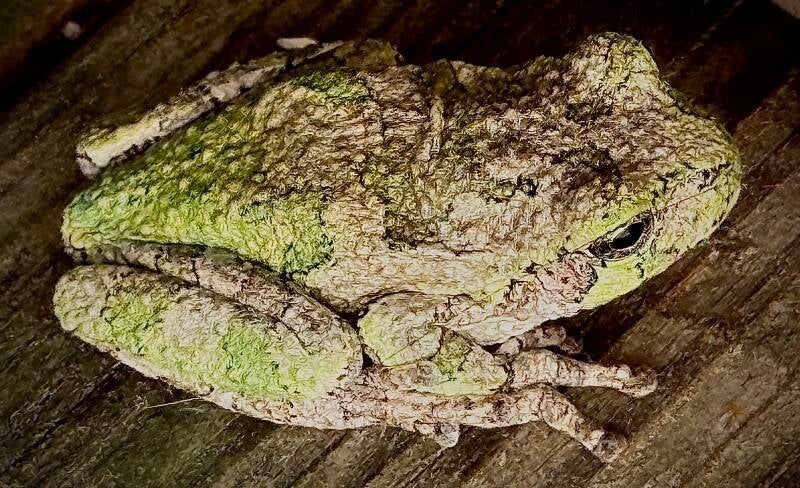
Color change and camouflage
Gray tree frogs are famous for their ability to change color. They can shift from gray to green or even brown depending on temperature, light, moisture, and surroundings. This change is not as dramatic as a chameleon’s, but it is still impressive. The color shift helps them blend into bark, leaves, and branches, making them harder for predators to spot.
This camouflage is one reason they are so successful. When resting on a tree trunk, a gray frog may match the bark almost perfectly. When perched among green leaves, it may appear greener. This ability makes them look different from moment to moment and helps them survive in changing environments. Their skin is both protective and practical.
Their fingers and toes
Gray tree frogs have special fingers and toes that set them apart from many other frogs. Their toes end in rounded adhesive pads that help them climb smooth or vertical surfaces. These pads act like tiny suction-like grips, allowing them to cling to leaves, bark, and even glass. This is one of the main reasons tree frogs are such skilled climbers.
Their feet are also useful for perching and jumping. The structure of their toes gives them a strong grip while still letting them move quickly when needed. These adaptations allow them to live in trees, shrubs, and tall vegetation instead of staying only on the ground or in water. Their hands and feet are a major part of what makes them true tree frogs.